Recently, TetraBOT, together with multiple industry partners, officially launched T-WAVES, a general industrial embodied intelligence model built on a trusted safety framework. Designed for complex application scenarios such as industrial operations and maintenance, emergency response, and safety-critical tasks, the model explores how intelligent agents can evolve from simply executing actions to understanding environments, making autonomous decisions, and operating safely.
As an industry partner, Cheng-Tech is bringing millimeter-wave radar perception into embodied intelligence applications, adding a new dimension of environmental sensing for intelligent agents.
In embodied intelligence systems, vision helps agents understand objects and scenes, while tactile sensing helps them perceive contact states. Millimeter-wave radar provides information such as range, velocity, and spatial change. Through multimodal sensing fusion, Cheng-Tech and TetraBOT are jointly exploring how to improve environmental perception and task execution reliability for embodied intelligence systems in real industrial environments.
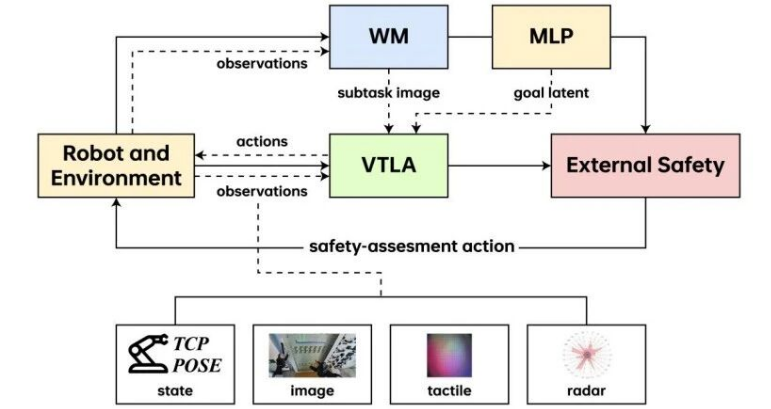
TetraBOT T-WM-VTLA-S Technical Architecture Diagram
As embodied intelligence moves from the lab into real industrial settings, intelligent agents are facing increasingly complex environments. Real industrial sites often involve:
changing lighting conditions
occlusion and interference
moving personnel and equipment
high-risk operating environments
Single-vision perception solutions have limitations in some scenarios. Millimeter-wave radar, by contrast, operates reliably in all weather conditions and provides target range, velocity, and spatial position information, making it an important complement to visual perception.
For embodied intelligence, perception capability determines how deeply an agent can understand the physical world. The addition of millimeter-wave radar enables intelligent systems to obtain richer environmental information and provides a more reliable data foundation for executing complex tasks.
Millimeter-wave radar can generate rich spatial point cloud data, but real-world radar data also includes target information, environmental reflections, and various types of clutter.
A key challenge in radar applications is how to extract useful information from complex data.
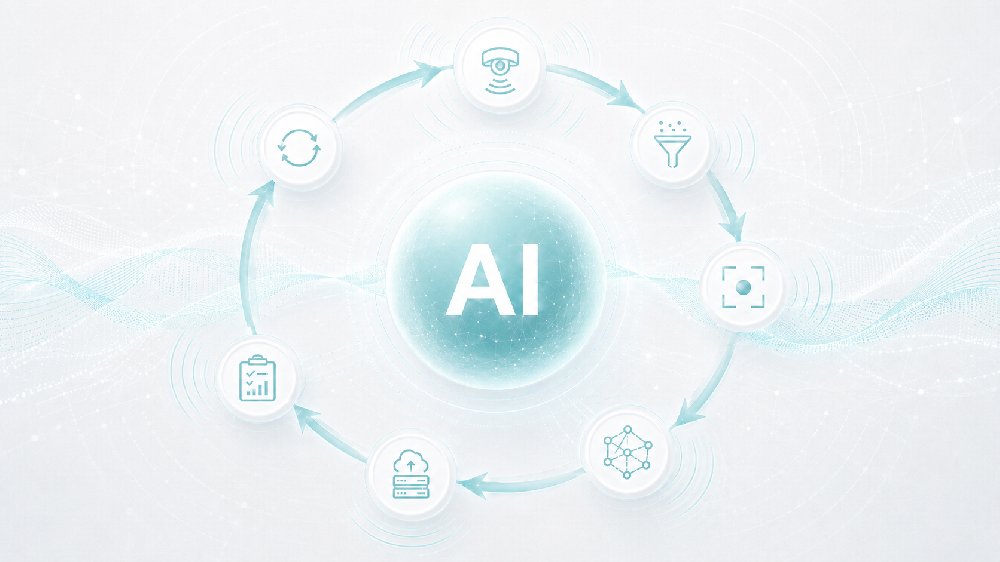
Xingqiong AI Point Cloud Model Workflow Diagram
Based on years of automotive millimeter-wave radar data accumulation, Cheng-Tech has developed the Xingqiong AI Point Cloud Model, which uses AI algorithms to intelligently process radar point clouds in order to:
extract valid target information
filter out abnormal points and environmental clutter
improve the stability of target detection
In embodied intelligence applications, this capability helps intelligent agents better understand their surroundings by enabling them to:
identify people and moving targets
assess spatial safety conditions
support motion planning and safety control
This gives intelligent systems more stable perception capability in complex environments.
Executing complex tasks requires not only target recognition, but also an understanding of the entire operating space. Cheng-Tech’s InsightRadar centralized computing radar architecture uses multi-radar collaboration and centralized computing to provide intelligent systems with richer spatial perception information.
When combined with vision and other sensors, it can further improve:
target localization accuracy
spatial environment understanding
dynamic target tracking capability
In scenarios such as industrial inspection, energy operations and maintenance, and unmanned production, the system can enable 360° global target recognition, target localization, and map building, including SLAM-based point cloud maps and occupancy grid maps, helping embodied intelligence systems more accurately understand their own position and surrounding environment for path planning and task execution.
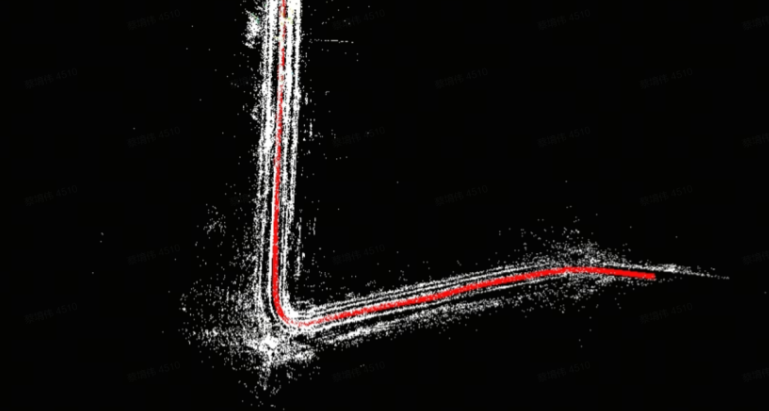
SLAM-Based Point Cloud Map Construction
In the future, embodied intelligence will need not only to complete tasks, but also to understand interactions between humans and the environment in a more natural way. In addition to target detection results, Cheng-Tech millimeter-wave radar can also output richer raw sensing data.
Combined with AI models, raw radar data can support:
action recognition
gesture recognition
human-machine interaction understanding
collision warning and safety protection
In related tests, foundation models using Cheng-Tech radar data as input achieved gesture recognition accuracy of over 95%. In future industrial scenarios, workers may be able to interact with intelligent systems through simple gestures.
At the same time, intelligent systems can better understand task execution processes by perceiving equipment status and motion changes.
The development of embodied intelligence depends on high-quality data. However, real industrial data is often difficult to collect, costly to annotate, and highly diverse across scenarios.
Cheng-Tech’s Xingliu Data Closed-Loop System supports:
data collection
automated cleaning
intelligent annotation
model training
automated evaluation
This helps customers build data assets more efficiently according to real application needs. Through continuous data accumulation and optimization, the system provides the foundation for ongoing improvement of embodied intelligence models.
In this collaboration, TetraBOT focuses on industrial embodied intelligence model capabilities. Through the T-WAVES architecture, it integrates vision, language, action, state-vector tactile sensing, world models, and safety control systems to enable intelligent agents to understand and execute complex tasks.
Cheng-Tech contributes its strengths in millimeter-wave radar perception, providing intelligent agents with a new source of environmental sensing input.
By combining their respective expertise in intelligent models and perception technologies, the two companies are jointly exploring how embodied intelligence can not only understand tasks, but also perceive environments and complete work safely and reliably in real industrial scenarios.
Over the past decade, Cheng-Tech has remained deeply focused on automotive millimeter-wave radar, continuously accumulating expertise in perception algorithms, data, and engineering through large-scale mass-production deployment.
As intelligent technologies continue to evolve, millimeter-wave radar is expanding beyond automotive sensing into a broader range of intelligent applications. Cheng-Tech aims to combine millimeter-wave radar with AI technologies to give intelligent agents a new dimension for understanding the real world, and to work with industry partners to bring embodied intelligence into more real-world application scenarios.
Cheng-Tech has already established a comprehensive AI perception framework covering core capabilities such as AI computing centers, AI radar products, ground-truth systems, data closed-loop systems, AI smart perception platforms, and automated evaluation systems.
These capabilities support applications across automotive radar, in-cabin radar, robotics radar, and security radar, helping Cheng-Tech build perception solutions for future intelligent applications.
MAILBOX:
CT@chengtech.net
 Shenzhen company
ADD: 3F-5F, Building C, Chengtou Zhiyuan, No. 37, Cuijing Road, Pingshan District, Shenzhen City
TEL: 0755-23215221
Suzhou company
ADD: No. 7, Suyang Road, Huangdai Town, Xiangcheng District, Suzhou City
TEL: 0512-68359858