The deployment of advanced intelligent driving is reaching a critical turning point.
Satellite radar architecture is widely recognized as a long-term direction for vehicle perception. Yet bringing this new architecture into production requires overcoming a series of challenges, including multi-radar coordination, automotive-grade compliance, and production ramp-up. What the industry truly lacks is not another concept, but a commercially proven, mass-production reference.
As the first company in the industry to achieve mass production of satellite-architecture millimeter-wave radar, Cheng-Tech draws on a decade of technology and engineering expertise to support OEMs across compliance, R&D, and mass production, delivering proven results in the transition toward satellite radar architectures.
While most satellite radar solutions in the industry remain at the R&D and validation stage, Cheng-Tech has already achieved a breakthrough in mass production.
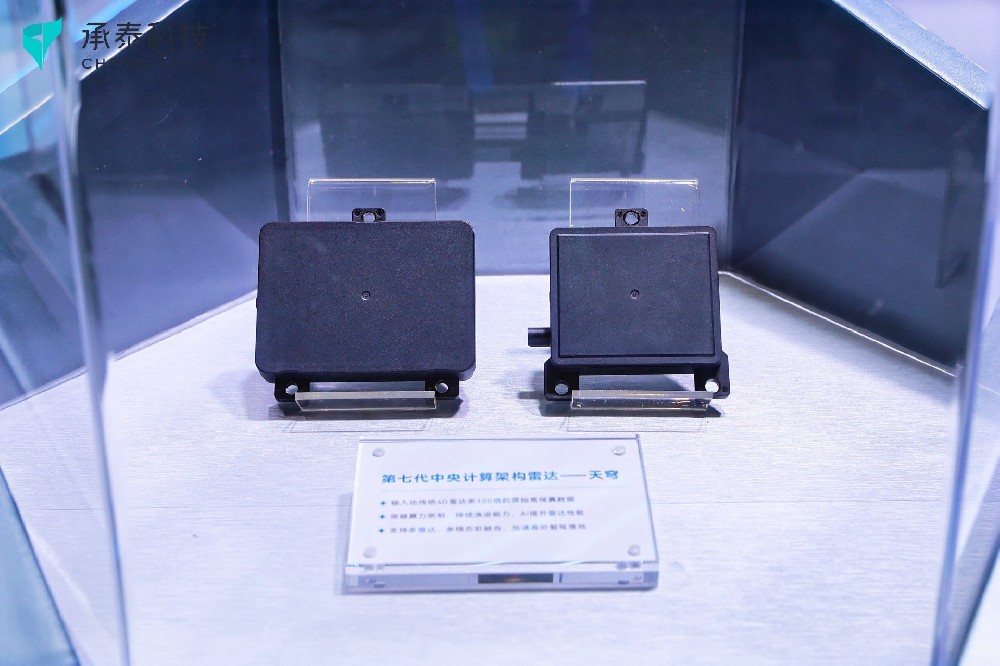
To date, InsightRadar, Cheng-Tech’s centralized computing radar architecture, has been designated for more than 40 vehicle models, with over half already entering vehicle deployment.
This not only validates the feasibility of the satellite radar architecture, but has also enabled Cheng-Tech to establish a complete methodology covering requirements definition, hardware-software co-development, vehicle-level validation, and mass-production delivery. This helps OEMs reduce technology introduction risks and accelerate project deployment.
At the core of commercial vehicle deployment, L3 and higher-level automated driving requires stable and reliable perception across all weather and road conditions.
Cameras and LiDAR can face detection limitations under challenging conditions such as glare, dense fog, and dust. Millimeter-wave radar, with its inherent ability to operate through rain, snow, fog, and dust, as well as directly measure velocity, provides indispensable sensing capability under adverse conditions.
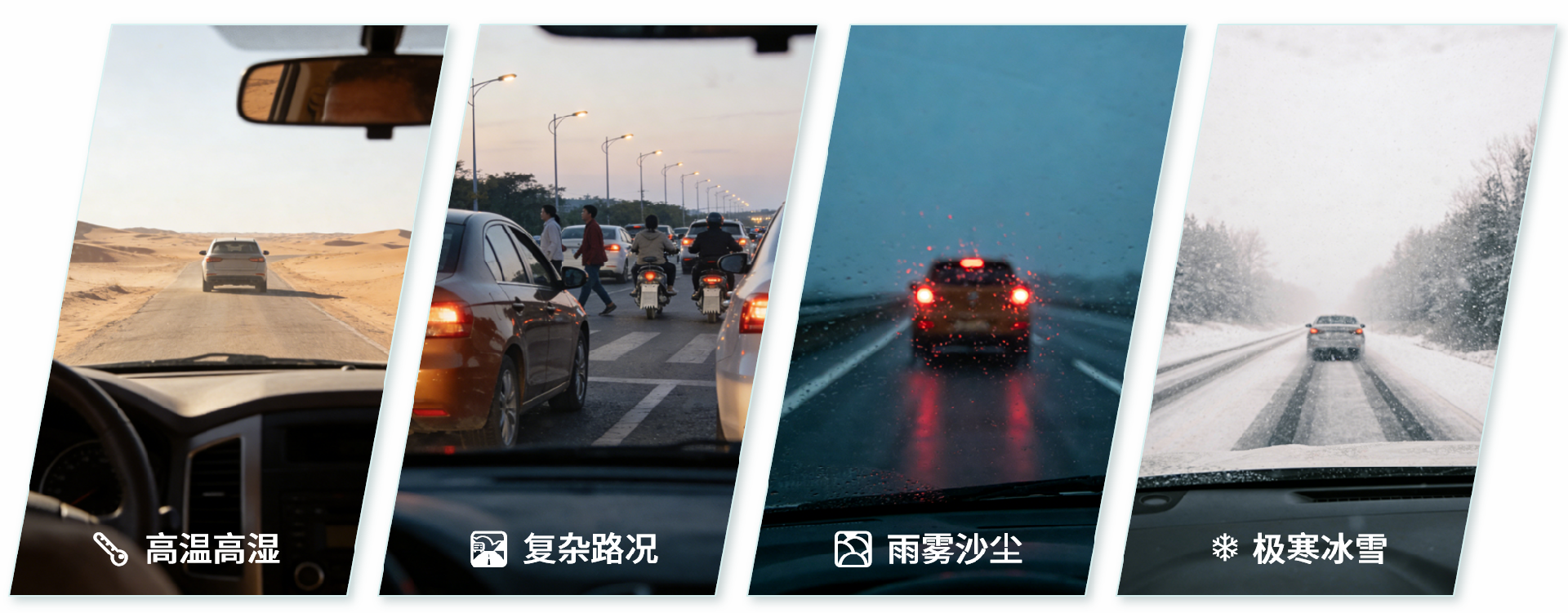
The physical characteristics of millimeter-wave radar define its role as a critical safety redundancy, while the evolution of foundation models and early-fusion architectures makes satellite radar a natural architectural choice.
Traditional radar acts as an “information black box,” filtering out much of the underlying data and limiting its ability to support early fusion. Satellite radar, by contrast, captures high-fidelity raw data through distributed sensing nodes and processes it centrally, providing more complete data inputs, stronger fusion capability, and greater room for continuous evolution.
This enables full-coverage blind-spot perception, precise multi-target tracking, all-weather safety redundancy, agile response across the full speed range, and closed-loop data capabilities across diverse scenarios.
Hardware and computing costs are often seen as the primary challenges facing satellite radar.
In practice, however, mass-production deployment involves a much broader set of engineering challenges: PoC power-supply stability, low production yield in waveguide manufacturing, inefficient adaptation across multiple computing platforms, low utilization of edge computing resources, and difficulty in labeling and reusing perception data.
Achieving stronger radar performance also requires comprehensive upgrades to imaging and tracking architectures, as well as calibration and alignment solutions.
True large-scale production is only possible when every part of the system is engineered to production-grade standards.
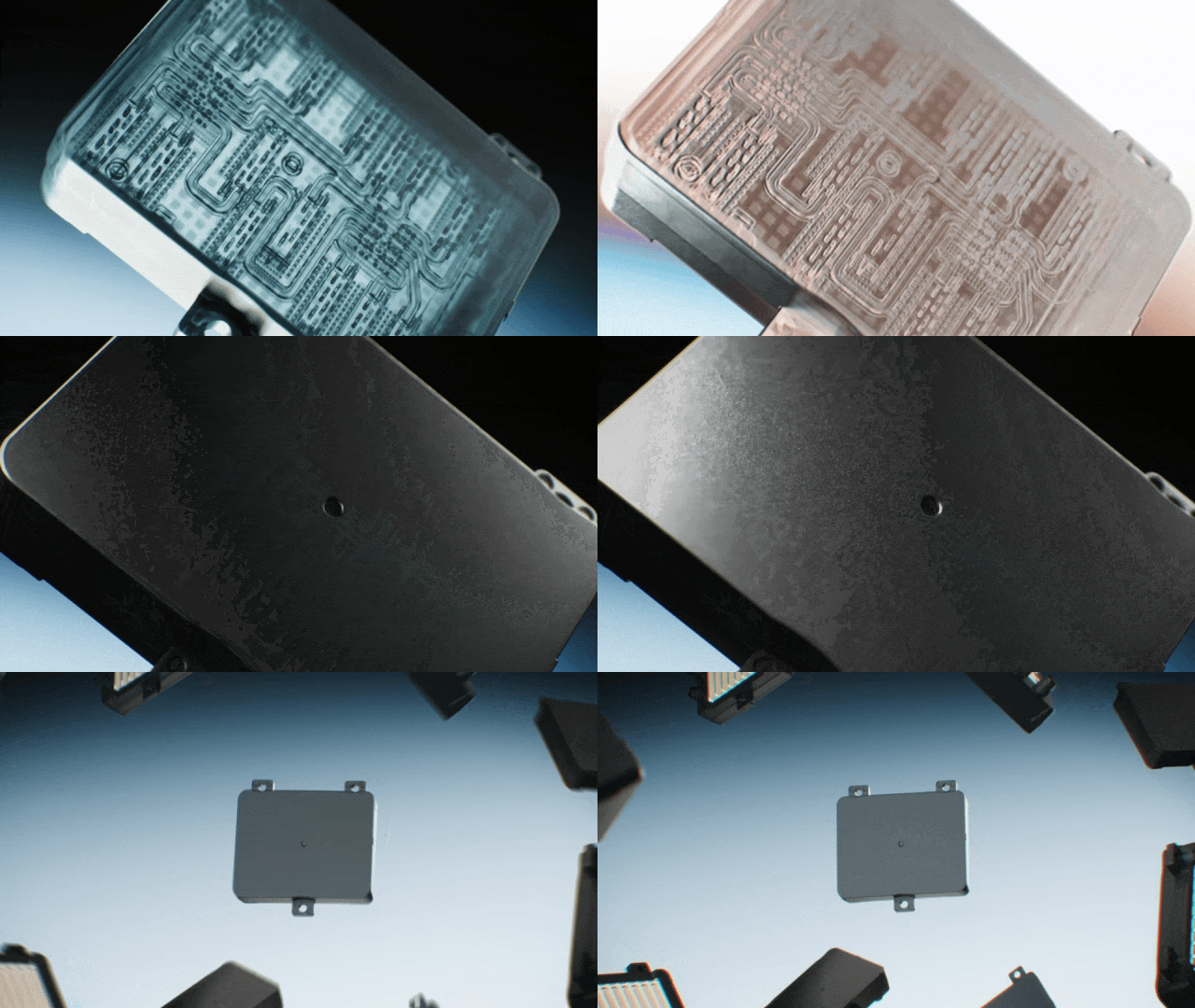
With more than a decade of technology accumulation and experience from tens of millions of radar shipments, Cheng-Tech has systematically addressed these challenges and turned rapid satellite radar deployment into a production reality.
Cheng-Tech satellite radar combines AI-native data capabilities, agile platform deployment, and cost-optimized design to deliver three core business values for OEMs.
Cheng-Tech satellite radar integrates AI point-cloud models and AI object-detection models to address key perception challenges such as clutter interference, missed detection of weak targets, and recognition of stationary obstacles.
Supported by automated evaluation and closed-loop data platforms, the system continuously improves through data-driven iteration, providing critical perception redundancy for L3 and higher-level automated driving.
Cheng-Tech provides a complete development toolchain and compatibility with mainstream computing platforms. With deep hardware-software decoupling, OEMs can flexibly integrate the system, complete calibration efficiently, and accelerate vehicle-level deployment.
This helps mitigate common production risks, reduce engineering uncertainty, shorten development cycles, and support faster new-model launches.
Through highly optimized hardware architectures, including waveguide antenna designs, combined with mature manufacturing processes and the economies of scale enabled by tens of millions of units produced, Cheng-Tech significantly reduces radar unit cost while maintaining both high performance and strong cost efficiency.
From identifying the industry trend to proving it in mass production, the market needs more than technological innovation. It needs scalable and repeatable production references.
Cheng-Tech is currently working closely with multiple leading OEMs and has completed adaptation across mainstream intelligent driving compute platforms.
Guided by its brand DNA — “Lead with Courage. Deliver with Action.” — Cheng-Tech will continue to advance the deployment of intelligent driving through production-proven perception technologies, accelerating the transition of advanced intelligent driving from concept to widespread adoption and enabling safer, smarter mobility worldwide.
MAILBOX:
CT@chengtech.net
 Shenzhen company
ADD: 3F-5F, Building C, Chengtou Zhiyuan, No. 37, Cuijing Road, Pingshan District, Shenzhen City
TEL: 0755-23215221
Suzhou company
ADD: No. 7, Suyang Road, Huangdai Town, Xiangcheng District, Suzhou City
TEL: 0512-68359858